 |
| Blood Swept Lands and Seas of Red |
Showing posts with label Remembrance. Show all posts
Showing posts with label Remembrance. Show all posts
Friday, 7 November 2014
Remembrance 2014
The long process of reviewing the past century continues but Sunday is for remembrance.

Friday, 6 June 2014
6 June 1944
 | ||
| Portal |
This doorway was one of the last which men passed through on their way down to the troop ships in Operation Overlord.
It would be poetic if it had once been a chapel but it was probably a latrine.
Being shit scared didn't stop them.
Sunday, 10 November 2013
Remembrance 2013
 |
We Will Remember Them |
Compromise.
Much has been written about the misunderstanding of the poppy.
Locally, churches are holding services this evening to pray for peace in order to give people of a different perspective a way to express an earnest desire that bloodshed be averted.
Tuesday, 9 April 2013
Margaret Thatcher 1925-2013

The White Hart is a noble creature which is nonetheless doomed before it starts its run because clever people have already put a chain round its neck and have organized the traps it will inevitably fall in to. This does not prevent the hart from running, time and time again, even though the hunters think they've killed it. The errors the hart makes while running do not make it any less noble; there is a limit to what even the best runner can cope with and it is always outnumbered.
All fans of English and Celtic mythology know that when the old hart dies, a new one is growing in the shade of the forest and that it runs with the hopes and life of the nation on its back. It hasn't broken cover yet. When it does it will have all the distilled experience of the old hart to draw on.
Sunday, 13 November 2011
Remembrance Sunday 2011
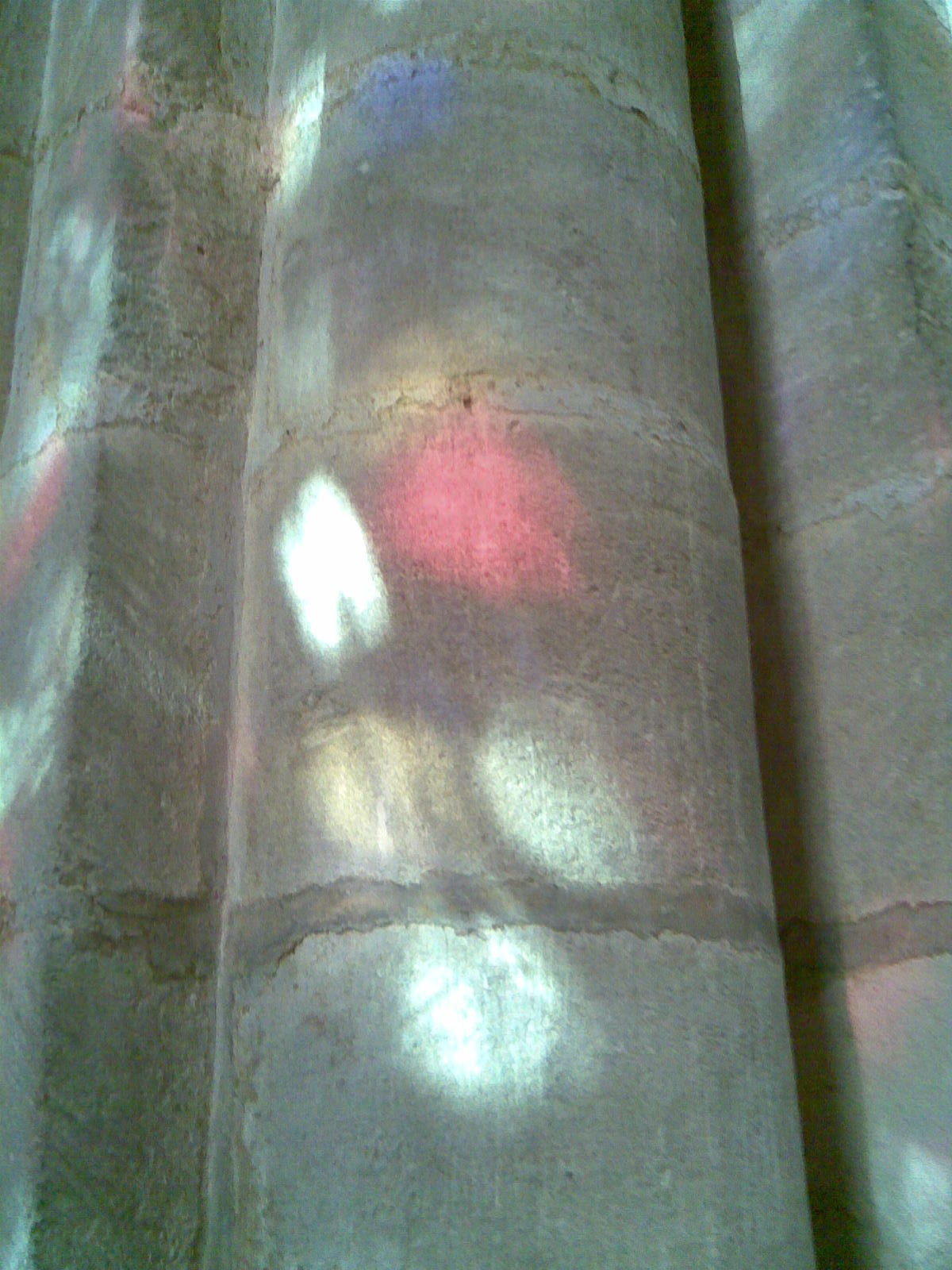
We do not remember for Their sake alone
Although that would be enough.
Forgetfulness is the opiate justified for the immediately suffering
But not for us.
Remembrance is for our own sake.
Friday, 11 November 2011
Armistice 2011
This year I was privileged to visit the churchyard of St Just in Roseland, Cornwall.

The churchyard is famous for its graves on a steep hill where the church lies in the cup of the surrounding paths in a sub-tropical garden with a tidal pool at the bottom. The sea coming and going and the exotic planting make the spot simultaneously unearthly but eccentrically English.
The high tide coincided with sunrise, so I was there to watch the church emerge from darkness. Because the natural form of the bay is a deep amphitheatre, the light produces extraordinary effects such as the church tower not having a top but carrying on up to heaven.
Looking around the graves there were several elegant War Grave headstones, particularly fine black ones which take a sharp cut and don't easily wear away. It was pleasing to find that volunteers have been photographing them and indexing them.
There are several searches one can do. This one was for war graves in St Just in Roseland.
Clicking on any of the returned names goes to a photograph of the individual gravestone with details which are known about the person.

The churchyard is famous for its graves on a steep hill where the church lies in the cup of the surrounding paths in a sub-tropical garden with a tidal pool at the bottom. The sea coming and going and the exotic planting make the spot simultaneously unearthly but eccentrically English.
The high tide coincided with sunrise, so I was there to watch the church emerge from darkness. Because the natural form of the bay is a deep amphitheatre, the light produces extraordinary effects such as the church tower not having a top but carrying on up to heaven.
Looking around the graves there were several elegant War Grave headstones, particularly fine black ones which take a sharp cut and don't easily wear away. It was pleasing to find that volunteers have been photographing them and indexing them.
There are several searches one can do. This one was for war graves in St Just in Roseland.

Clicking on any of the returned names goes to a photograph of the individual gravestone with details which are known about the person.
Saturday, 22 October 2011
Trafalgar Pudding

Captain Haddock bids us raise a glass to Freedom and the Men who fought for it at the Battle of Trafalgar- and won - on 21 October 1805.
I wonder what the cook did on the night before the battle. The fire will have to be doused. Do you reserve some food for the battle but use the rest of the stores as far as possible? If men might see only one more sunrise there's no point denying them what comfort there is. On the other hand, what if you win? People would want something to keep them going on the way home.
One thing I am clear about. The youngest crew member, Thomas Twitchett aged 12 - the same age at which Nelson went to sea - should not have faced battle without a sweet to eat, even if it meant stealing somebody else's treacle. This is the night to remind the purser that we do not bind the mouth of the beast which treads the corn.
The general pudding was duff, which might have meant anything from a boiled rich pudding with dried fruits, suet, spices and treacle, to a dough of stale biscuit with currants to disguise the insects.
On land, then, an interpretation of plum duff which cheats by using buttermilk which they certainly wouldn't have had for more than a day or two out of port, and a controllable oven, but cooking in a basin of water to simulate a steamed pudding sitting on the great iron range on the galley.
This plum duff uses plums because they are English - the finest cooking plum being Kea plums which grow along the Fal estuary in Cornwall - and dates in remembrance of Nelson's earlier 1798 victory at the Battle of the Nile. History is full of dates. The date palm is properly called Phoenix Dactylifera - the Phoenix tree which bears fruits like little fingers. I prefer to believe this is a reference to the Immortal Egyptian Fire Bird rather than any of the other explanations for how the Phoenix name was chosen for these palms.
****
You will need a large pudding basin or two smaller ones to speed up the cooking time . The pudding rises so don't fill them much more than half-way.
2oz dried plums, chopped. Kea plums already made in to jam would also work and produce a sweeter pudding rather than the sherbet-sharp finish.
2oz dates, stoned and chopped. These are Halawi dates so do your own puns.
Soak the fruits together in a good gill of rum and the juice of half a lemon.
Add about a teaspoon full of mixed spice to taste. I'm using nutmeg and cinnamon.
A"good gill" is as much rum as suffices to wet and swell the fruit. When the fruit - but not the cook - has soaked up the liquor, continue:
Butter a large pudding basin well and cover the bottom with a layer of the fruit mix, reserving the most of it. Put the liquor in the bottom to make a syrup, if there is any.
Cream together 2oz butter and 2 oz sugar.
On the ship this would be salted butter and possibly treacle, but I'm using unsalted butter and plain granulated sugar.
Add 1 egg, beat in well, and stir in 4oz of self-raising flour. Many recipies use half-flour and half-breadcrumbs so this is a way to use up crusts.
Add buttermilk until the mix is soft like a sponge and almost ready to drop off the spoon. Use plain yoghurt if you can't lay your hands on butter milk. This helps to raise the pudding.
Stir in the reserved fruit - it may loosen the mixture slightly, so don't go mad with the buttermilk. You can always add a drop more.
Spoon the mixture on top of the fruit already in the basin. Put a cover of foil on it to stop the top getting wet.
Place the basin in a bigger pan of hot water - a deep baking tin, for example - so that the water rises half-way up the basin. Set the pair in a medium-hot oven, about gas mark 6, although you could simmer it on the hob if you prefer.
Keep the water topped up for two hours, then check if the pudding is done by taking off the foil carefully and sliding a knife it to see if it comes out clean. If it needs longer, and perhaps to dry out, then take the foil off.
Of course, if you are spreading this over two smaller pudding basins it will set faster, best check after an hour.
When a knife comes out clean, run a knife round the sides of the pudding, wait about five minutes for it to be less likely to split, turn out without burning your fingers, and serve.
On land we can use custard or cream but unless someone had managed to hide Daisy the milk cow aboard as well as Henny Penny who laid the egg, you will have to improvise with a dressing of butter, rum and sugar. The pudding is rich because of the butter and buttermilk so it is not essential to put anything else on.

Plum and Date Rum Duff
Note: if you used a lot of rum it may not all convert in the cooking. Therefore be aware that it might not be suitable for a modern 12 year old, or if driving or operating machinery.
All Seeing Eye invites anyone in Gibraltar to the Trafalgar Cemetery at 12 noon on Sunday 23 October, where there will be an act of remembrance. The Immortal Memory
Those in the East of England might like to visit Nelson's birthplace, Burnham Thorpe, which is still substantially as Nelson saw it.
Monday, 9 May 2011
Liberation Day
Today is Liberation Day on Jersey. Thousands will attend an outdoor service in Liberation Square, commemorating the release of the Channel Islands from the Occupation in 1945.
The subject of the Occupation is still a raw one because the Channel Islands are a mirror for Britain. They are what would have happened to us. To get an idea of the scale of the invasion there is a trail which is best visited but the download gives an idea of the magnitude of the event.
The most important site is the complex known as The Jersey War Tunnels - the underground hospital Hohlgangsanlage 8. It is one of the most important war museums in Europe, although it is comparatively small. Allow a full day to walk through the long corridors which are set up to chronologically document how the war affected a small island.
The Channel Islands were also a laboratory for Goebbels who took keen personal interest in how the invasion was handled as it formed part of his PR strategy for his German audience. He arranged for photos to be taken which allowed the folks back home to imagine that this was the Isle of Wight - something even the invading soldiers were sometimes confused about - and suggested that far from resisting, the inhabitants had all but welcomed them with open arms. The sore point being, that some - a very few it should be grimly noted - did welcome them with open arms and legs. The Germans were good-looking and appeared to have cash.
Anyone stranded on the Island at that point would have thought the Reich had triumphed and there was nothing for sensible people to do but knuckle under and be enfolded in to the new empire, inch by inch. There was nothing left but a thread of hope and small acts of resistance, such as hiding"V" lapel pins made out of Victorian sixpences. Each act was met with increasing ferocity and repression. Albert Bedane decided to hide a Jewish woman and a number of other people; his thinking was that if he was to die, he might as well make it for a large risk.
The Islanders hung on despite the risks, the deaths, the deportations. On May 8 1945 the starving fag-end of the Reich finally accepted they had run out of arms, men and money. On May 9 the formal surrender locally was done on HMS Bulldog in St Peter Port, Guernsey.
Happy Liberation Day, Channel Islands.
The subject of the Occupation is still a raw one because the Channel Islands are a mirror for Britain. They are what would have happened to us. To get an idea of the scale of the invasion there is a trail which is best visited but the download gives an idea of the magnitude of the event.
The most important site is the complex known as The Jersey War Tunnels - the underground hospital Hohlgangsanlage 8. It is one of the most important war museums in Europe, although it is comparatively small. Allow a full day to walk through the long corridors which are set up to chronologically document how the war affected a small island.
The Channel Islands were also a laboratory for Goebbels who took keen personal interest in how the invasion was handled as it formed part of his PR strategy for his German audience. He arranged for photos to be taken which allowed the folks back home to imagine that this was the Isle of Wight - something even the invading soldiers were sometimes confused about - and suggested that far from resisting, the inhabitants had all but welcomed them with open arms. The sore point being, that some - a very few it should be grimly noted - did welcome them with open arms and legs. The Germans were good-looking and appeared to have cash.
Anyone stranded on the Island at that point would have thought the Reich had triumphed and there was nothing for sensible people to do but knuckle under and be enfolded in to the new empire, inch by inch. There was nothing left but a thread of hope and small acts of resistance, such as hiding"V" lapel pins made out of Victorian sixpences. Each act was met with increasing ferocity and repression. Albert Bedane decided to hide a Jewish woman and a number of other people; his thinking was that if he was to die, he might as well make it for a large risk.
The Islanders hung on despite the risks, the deaths, the deportations. On May 8 1945 the starving fag-end of the Reich finally accepted they had run out of arms, men and money. On May 9 the formal surrender locally was done on HMS Bulldog in St Peter Port, Guernsey.
Happy Liberation Day, Channel Islands.
Sunday, 14 November 2010
Remembrance

The price they paid was very great.

But then look how beautiful their children are.
It is time now that only those who served or are serving can lay wreaths on our behalf. I’d rather be represented by them. For some years there was a justification that the politicians themselves had taken some measure of risk, but that no longer applies.
No more grandstanding for pols; they get to stand at the back quietly while better men and women step forward.
Subscribe to:
Posts (Atom)